
Northamptonshire mums speak out about the difficulties of back-to-school season for children with additional needs
Two Northamptonshire mums have spoken out about the difficulties of back-to-school season for children with additional needs, as parents struggle with finding school places and navigating outdated and incorrect council care plans.
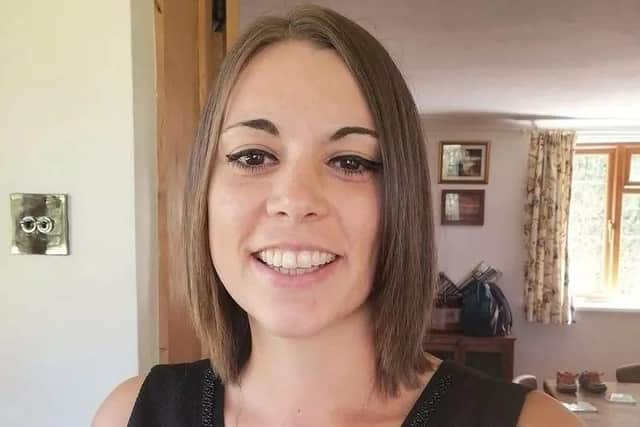
Sofia Gaspar, 32, of Wellingborough cares for her five-year-old son, who is currently out of school.
She has said issues with the council’s SEND service and provision make it feel like she is ‘stuck in the same place’, while other children are moving on and returning to education.
Northamptonshire councils have said the number of children being identified with SEND is increasing at ‘unprecedented rates’, but that work is continuing with parents and carers to improve SEND services.


The Wellingborough mother said she was faced with a wall of silence over the summer holidays while waiting to hear if her son would be enrolled at a school that could provide for his special educational needs.
Though he should be in his first years of primary, he has been out of formal schooling since his previous placement broke down earlier this year and is receiving tutoring in the interim.
Ms Gaspar said she found out at the beginning of September that North Northants Council (NNC) had been sending an old draft version of her son’s education, health and care plan (EHCP) to potential schools, which she says contained several errors.
She said this has resulted in him being turned down based on misrepresented needs and is concerned that the same errors may be occurring with other families.

She told the Local Democracy Reporting Service (LDRS): “No school had the correct information to assess whether or not they could take him on. It’s quite upsetting on several levels because my son is not getting the education he needs.
“I’m getting photos from my friends showing me their kids going to school, my nieces going to nursery and I’m so happy for them.
"But, everyone’s lives are going back to normal and my son is asking, ‘why can’t I go?’.
“It’s a time of year that affects mental health both for the parents and children because you see everybody else moving along in their life and you’re stuck in the same place.
"As a parent, you just want your child to be happy and have a fulfilling life and part of that is going to school and making friends.”
Ms Gaspar says NNC has since acknowledged that the wrong EHCP was sent out after she made a complaint, but that she was offered no explanation of how such serious failings were allowed.
She has also been told that new consultations will be sent out to schools this week with her son’s updated care plan.
She has now created her own website, called The Purple Guide, to help other families navigate the SEND system and empower them to stand together and fight for their rights, after finding through her own experience that a lot of time is ‘wasted knocking on doors’ and ‘going around in circles’.
She explained: “We treat SEND children like they are less. Them going to a school, them socialising, them getting their health checks, them being close to home is less important.
“The council need to see that, actually, it’s not an isolated case here. Everyone who has SEN children that I’ve spoken to has had some sort of issue or complaint.
“They’ve beaten parents into submission and I don’t want other parents to accept this either. The only way we can make this right is to fix the system itself.”
‘There’s a very big gulf between neurotypical and neurodivergent children’
Northampton mother Shannon Hitchcock, 37, has also said she received a shock at the start of this year’s summer term after she was told that her son, Cassian, had been deregistered from his current alternative education school and enrolled at another special school setting against her wishes.
She said she was only told on her son’s first week back that he would have to move, despite previously telling West Northamptonshire Council (WNC) it was not the right fit and she did not want her son to attend the establishment.
She said: “It was so stressful because I was thinking, come Monday, he’s not going to be able to go to school. It’s not fair to him because it’s such a massive disruption to him and his education, unnecessarily so.
“For me, it’s the lack of respecting parents’ rights to find out what is best for their children. He’s the one who has to go to school there and he has to feel comfortable there.
“Most kids who end up in alternative provision schools are traumatised from school previously - I don’t understand the logic of uprooting them.”
She said she managed to get in touch with a worker from the SEND tribunal council for WNC, who said Cassian, eight, would be able to stay at his current school until an appropriate placement can be found.
However, she also shared similar concerns about the difficulty of finding her son a suitable provision due to his EHCP being out of date and annual reviews not taking place on time.
She said his plan did not properly outline the years of progress he had made with speech and language therapy and also contained the wrong age within certain sections.
All local authorities have a duty to complete an annual review of every EHCP within a year of either the last review being completed or the plan being issued for the first time.
According to the most recent data ending June 2025, just 57.5 per cent of EHCP annual reviews were completed by WNC within 12 months.
Ms Hitchcock added: “The whole point of an EHCP is to outline the needs of a child so an appropriate school can be found. That’s really hard to do when the EHC plan is out of date.
“The whole system is flawed. There’s a very big gulf between neurotypical and neurodivergent children.
“With a neurotypical child, unless the parent’s moving house for example, they’re going to be going to the same school the whole time with the same teachers, the same classes and the same friends.
“If you have a SEN child, you could find out a day before that your kid has been registered at a different school and you haven’t even been told about it.”
Northamptonshire group SEND Mummas is a peer support group for mothers and female carers of children with special educational needs and disabilities across the whole county.
Co-founder Emma Briggs has also reflected on the difficulties and uncertainty that some SEND families face waiting to go back to school in September.
Her group has an online presence on Facebook and Instagram to support SEND mums and also comes together regularly to host in-person well-being and family events.
She told the LDRS: “People talk in the group about school on a daily basis, so whether it’s people going back to school and they haven’t got a place, or the transition between one school to another. It’s very hard at the moment.
“When children are going back around the summer holidays they’re at home, it’s their safe space, there’s not really a lot of stress put on them. Then they’re going back to school and they’ve got all this extra anxiety and fears.
“A lot of the time the council go out for consultation for school places and you don’t really hear anything from them and you have to chase them up and do so much of the investigation yourself.
“Parents are having to go from group to group, for example ours, to keep themselves clued up with their rights.”
Northamptonshire councils’ response
Cornelia Andrecut, executive director of children’s services for North Northamptonshire Council, said: “The number of children and young people being identified with SEND is increasing at unprecedented rates, both nationally and locally.
“This is putting a huge amount of pressure on capacity at North Northamptonshire’s state-funded special schools.
"To address this, the council has started a SEND strategic sufficiency programme, seeking to create 800 additional specialist places in partnership with mainstream and special schools by 2031/32.
“Alongside system-wide improvements, the council remains focused on supporting individual children and families.
"Where specialist placements are not immediately available, bespoke education and support packages are developed in partnership with families and professionals.
“These may include daily one-to-one tuition and tailored input from partner organisations, ensuring that each child’s needs are met with care, flexibility, and ambition.
“Earlier this year, the North Northamptonshire Local Area SEND Partnership – comprising the council, the NHS Integrated Commissioning Board, Northamptonshire Children’s Trust, and North Northamptonshire Parent Carer Voice – refreshed its SEND and Inclusion Strategy.
“The updated strategy reaffirms the partnership’s commitment to high aspirations for all children and young people with SEND, and outlines six key priorities:
- Early identification and meeting needs at the earliest opportunity through inclusive practice
- Co-production with families
- Building the capacity in the SEND system
- Transitions and Preparation for Adulthood
- A skilled, cross-organisational SEND workforce
- Strong, collaborative partnership working
“North Northamptonshire remains committed to ensuring every child and young person with SEND receives the support they need to thrive – now and into the future.
“If any families need further SEND support and information visit www.sendiassnorthnorthants.co.uk.”
A spokesman for West Northamptonshire Council added: “We do not comment on individual cases or circumstances. We remain committed to working closely with families to listen and respond to feedback.
“Our priority is to ensure that every child receives the right support tailored to their needs.
"We continue to work with parents and carers to improve our SEND services and remain focused on the best outcomes for children and young people.”